Drive-In Theaters and Maine
Maine's drive-in theater history mirrors the state's geography: spread thin across long distances, concentrated in small towns, and shaped by short summers. The earliest outdoor screens appeared in the late 1940s, part of a postwar building wave that gave Maine more than a dozen drive-ins by the mid-1950s. Locations ranged from Saco and Westbrook near the coast to Farmington and Skowhegan in the central highlands.
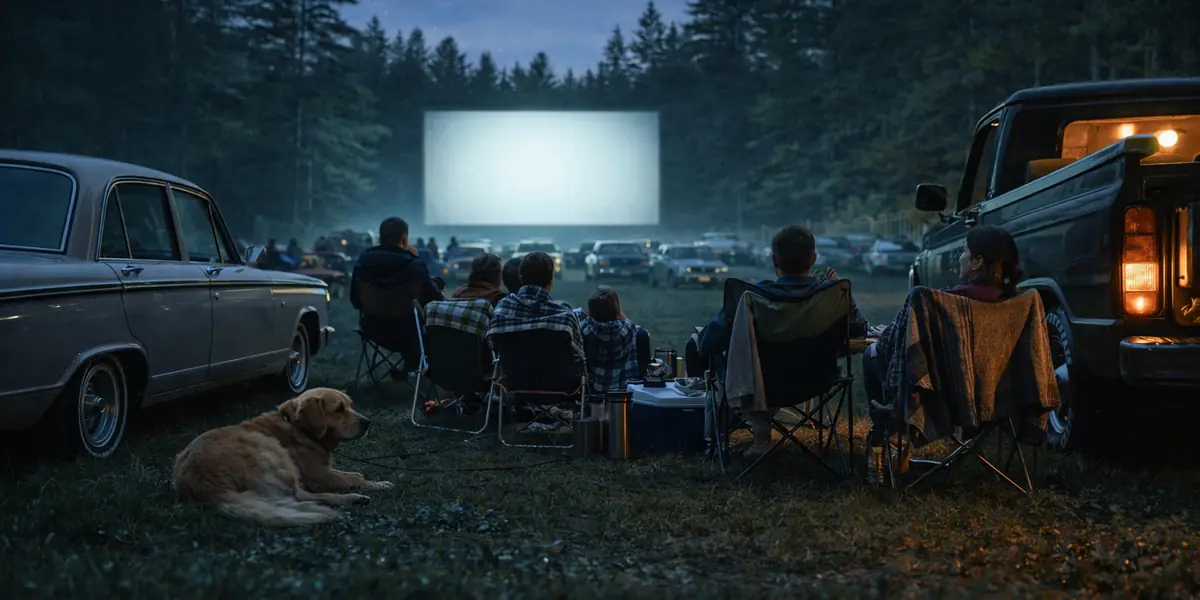
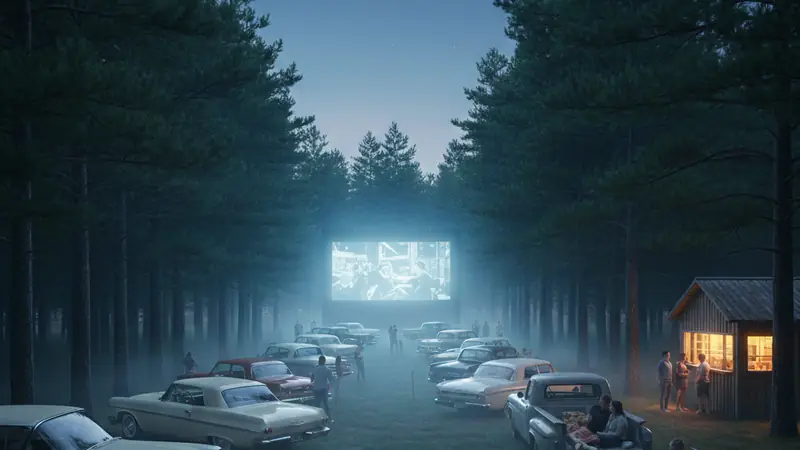
What made Maine's drive-ins distinct was their setting. Forest clearings, lakeside lots, and former farmland provided natural backdrops that urban theaters elsewhere couldn't match. The trade-off was a compressed season. Reliable outdoor screening weather in Maine lasts roughly from late May through early October, shorter than theaters in the mid-Atlantic or Southeast.
Most of Maine's drive-ins closed between 1975 and 1995 as indoor multiplexes expanded and VHS rentals took hold. The Bangor Drive-In's own 30-year dormancy from 1985 to 2015 was typical of the pattern. The pandemic years of 2020 and 2021 reversed the trend briefly. The Shotwell Drive-In in Rockport opened specifically during that period, and existing venues reported their strongest attendance in decades.
As of 2026, four outdoor theaters operate in Maine: Bridgton Twin, Prides Corner, Narrow Gauge, and Shotwell. That count has held steady since the Bangor Drive-In's permanent closure in 2022. Nationally, the United Drive-In Theatre Owners Association (UDITOA) counts roughly 330 active locations. Maine's four represent one of the higher per-capita concentrations in New England.
Maine's drive-ins sit in settings typical of northern New England: forest clearings, former agricultural land, and lakeside lots. Light pollution is limited outside Portland, which benefits screen visibility after dark.
The four-to-five-month operating season is shorter than theaters in the mid-Atlantic or Southeast. Weather cancellations are more common in Maine due to fog, rain, and early-fall cold snaps.